When Nintendo first released the Nintendo DS back in November of 2004, few would expect that one of the fastest selling games for the system would be, as Nintendo calls it, a “non-game.” Brain Age launched to limited mass appeal but it wasn’t until word of mouth spread over the months when it really took off. System sales skyrocketed as the game quickly was on the tip of everyone’s tongues. Brain Age isn’t your typical game though. It’s more of a brain stimulant in that it makes you constantly think in order to successfully “complete” the game.
Coming from someone who hates math with a passion, I was skeptical as to how much “entertainment” it could actually give me. This game is awesome. For some reason the object of doing math problems daily, albeit simple, is like a daily injection of Heroin. You need to have your daily knowledge of your brain age in order to survive. This is the main purpose and lasting appeal of Brain Age. Whether you’re an elementary school kid or an aging adult, you will instantly fall in love with this game.
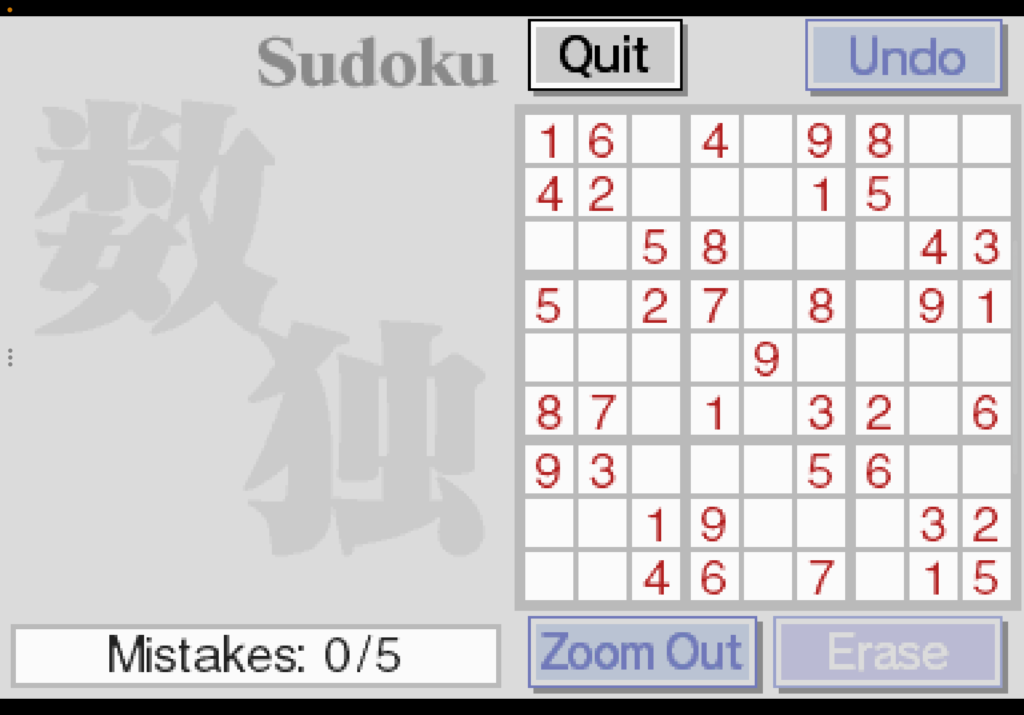
Brain Age isn’t just about math though. There are many other types of activities to get your prefrontal cortex stimulated. Calculations, reading, number games, counting syllables, time lapse and triangle math problems are all part of the fun package that you’ll enjoy each and every day for hours on end. One added bonus to the Brain Age mix is the inclusion of the Sudoku, the Japanese puzzle game that has swept the western hemisphere by storm. Although each activity has its own merits, there are flaws that pop out.
Calculations:
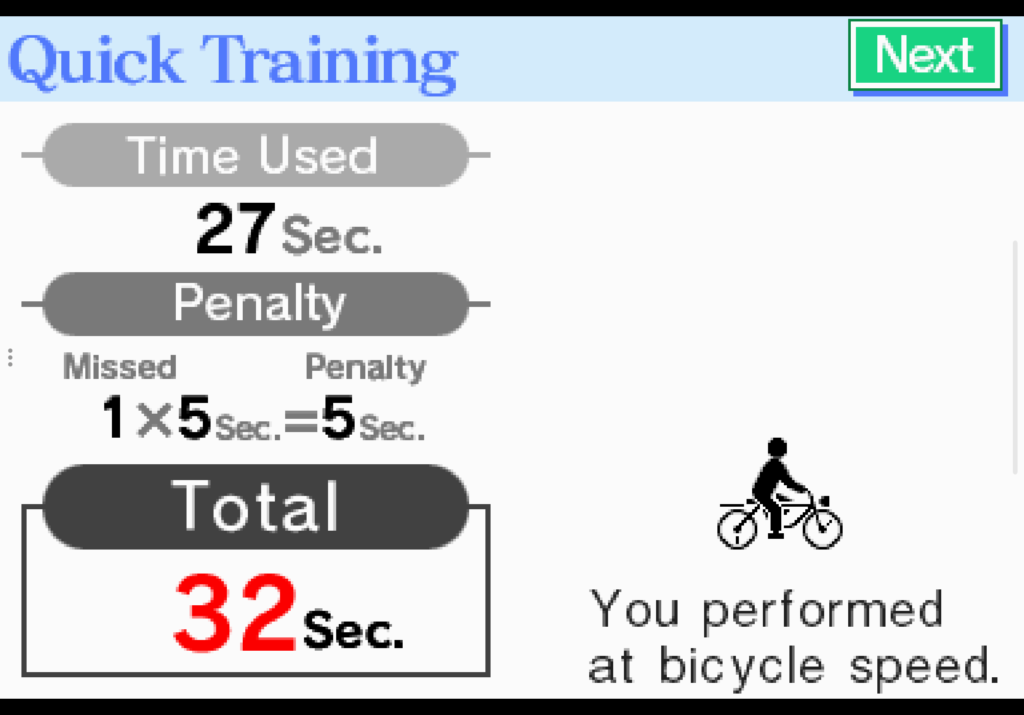
Whether it’s 20 or 100 calculations, just trying to speed through the equations as fast as you can is a thrilling and rewarding experience. Now since grade school have I had a plethora of so many easy math problems in the palm of my hand. The problems never get to out of hand and stick to just adding, subtracting and multiplication. That’s right, there are no Differential Equations of square roots here! The game measures your stats in how fast you do the problems and with how many mistakes you accumulate over a daily time period. Thankfully the hand recognition is good enough that you’ll be able to breeze through the problems in under twenty seconds easily. This is also where the problem lies though. Due to the nature of the game being so hectic, it’s only common that the hand writing of the player is going to be extremely messed up. Unfortunately the game isn’t THAT great to determine a straight line with a little squiggle in it is supposed to be a “3” and not a “5.” This is the only problem that arose when doing the calculations, but still, a problem nonetheless.